
- Dubai Visa Guide
- On 13.04.2026
- Jahanvi Sharma
7 Common Reasons Why Dubai Visa Gets Rejected
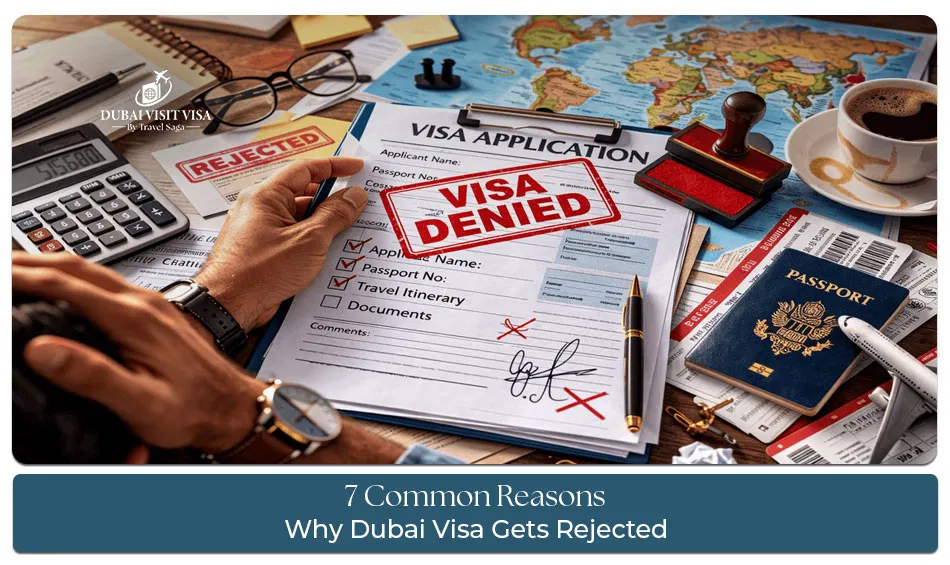
Getting your Dubai visa rejected can be really disappointing, especially if you’ve already made plans for your trip. But here’s the good news: most rejections aren’t random. They’re usually caused by small mistakes, missing information, or things you could have avoided. Things like wrong documents or past travel issues are common reasons. Knowing these problems helps you avoid them, save time and money, and feel less stressed. This simple guide shows you what to watch out for so you can apply better and get approved more easily.
Top Dubai Visa Rejection Reasons
Incomplete or Incorrect Documentation
If your documents for a Dubai visa are missing or have small mistakes, like typos, wrong names, incorrect passport numbers, or missing pages (like the last page), your visa will be rejected right away. Dubai authorities check everything very carefully and expect perfect accuracy. Even if your application is strong overall, any error will cause it to be rejected. You must go through all your documents carefully. Use the official forms and check every detail twice.
This is especially important when applying for a 30 Days Dubai Visa, as short-term visas are processed quickly and leave little room for corrections. You must go through all your documents carefully. Use the official forms and check every detail twice.
Unconfirmed or Mismatched Hotel/Flight Bookings
From 2025 or 2026, Indian travellers applying for a Dubai visa must book a hotel room that is confirmed and checked in real time, ideally with a QR code, and have a valid return flight ticket. Fake, unconfirmed, or mismatched travel plans will be closely checked. Dubai authorities use live databases to verify the details, so made-up or changed bookings will be easily spotted.
If you are opting for an Urgent Dubai Visa, the scrutiny becomes even stricter since authorities fast-track verification through live systems. Any inconsistency between your bookings and application details can lead to immediate rejection.
Insufficient Financial Proof
When applying for a Dubai visit visa as an Indian, you need to show that you have enough money to cover your trip. Visa officers look at your bank statements to check for things like very low balances, large deposits without a reason, or missing transactions. If your bank records don’t show regular activity for 3 to 6 months, it may raise doubts. If you can’t prove your income or assets, your visa might be rejected. It’s important to have a clear and honest banking history with regular deposits and expenses. For longer stays, like a 60-day Dubai Visa, financial checks are more detailed, and insufficient proof can easily result in rejection. Avoid large unexplained deposits and maintain a consistent banking history for at least 3–6 months.
Previous Overstays or Uncancelled Visas
If you have ever stayed in the UAE longer than your visa allowed, or if an old visa wasn’t officially cancelled by your sponsor, your new visa application will probably be rejected or blocked. The UAE keeps strict records of visa rules, and any past overstay or uncancelled visa is seen as a violation. This is particularly critical for travellers applying for a Multiple Entry Dubai Visa, as their travel history is reviewed more thoroughly due to repeated entries. Make sure all previous visas are properly cancelled before applying again.
Unskilled Profession Listed in Passport
Passports that list simple jobs like cleaner, driver, or labourer often get closely examined or even rejected by immigration officials. These jobs don’t require special training or skills, so authorities worry about whether the person is really eligible to work, if they can support themselves, or if they’ll add value to the local economy. Because of these concerns, applications for such jobs go through more checks, interviews, or are denied, especially in countries with strict rules on who can work. This unfair treatment can hurt people who are truly looking for jobs.
“No Surname” on Passport
Indian passports that only have a first name and no last name often cause problems at the UAE immigration. The UAE needs full names, including the last name, to verify identity. If a passport doesn’t have a last name, officials may mark it as incomplete or wrong, which can lead to delays, being turned away, or not being allowed to board. This is because the UAE has strict rules for matching names. This can also create complications when applying for short-term permits like a Transit Visa Dubai, where processing time is limited, and errors cannot be corrected quickly.
Suspicious Travel Patterns (Solo Under 25 or Frequent Short Trips)
Young women under 25 who travel alone might be watched more closely because of stereotypes and biases about women. Officials might ask more questions about why they’re travelling or what they’re doing, which could lead to extra checks. Also, making many short trips to Dubai in a row can raise alarms. This might make officials think you’re trying to work illegally on a tourist visa instead of just visiting.
If you are wondering Why you Dubai Visa Taking So Long to get through, then make sure that you read this blog.
How to improve approval chances in 2026?
- Master New Mandatory Document Standards: Since early 2026, a high-quality passport cover page scan is mandatory. Use professional scanners; ensure MRZ is clear and unedited. Submit recent, full-face, white-background photos without glasses, not scanned copies. Missing these leads to immediate rejection.
- Strengthen Financial and Career Evidence: For 30 days, maintain AED 3,000; for 60 days, AED 5,000. Show stable bank statements over 3–6 months. Avoid sudden large deposits. Skilled professionals should submit salary slips or NOCs to reduce application risk.
- Verify Sponsorship: To be sponsored in the UAE by a resident in 2026, ensure the sponsor meets the required monthly salaries: AED 4,000 for immediate family, AED 8,000 for extended family, and AED 15,000 for non-relatives or friends.
- Leverage Official Tech Portals: Apply through the UAE ICP or GDRFA portals for tracking. Eligible visitors from the US, UK, EU, Canada, Australia, Japan, or Singapore can use a visa-on-arrival. Mandatory UAE-approved health insurance is strictly required and often included in visa fees.
- Tactical Timing and Logistics: Apply 14 days early to handle delays. Wait 30 days after over 20 days in Dubai to avoid frequent traveller flags. Use refundable bookings to prevent financial loss if visa processing is delayed.
Here is the Dubai Travel Checklist for Indians that will come in handy when travelling to the city of Gold.
Conclusion
Dubai visa rejections happen more often than you may realise, but the good news is, they can be avoided. Just make sure you check all the details, use the correct documents, and follow the latest rules. A little extra preparation can make a big difference and help you avoid stress when travelling. Ready to apply with confidence? Go to dubaivisitvisa.in for a simple, fast visa process, expert help, and quick approval. Get your Dubai visa right and enjoy planning your dream trip!
Read More Blogs: