
- Home
- Dubai Travel Guide
- Dubai Currency Guide for Indians: Dirhams, Exchange Rates, Cards & Cash Tips
- Dubai Travel Guide
- On 17.08.2026
- Lovanshu Tiwari
Dubai Currency Guide for Indians: Dirhams, Exchange Rates, Cards & Cash Tips
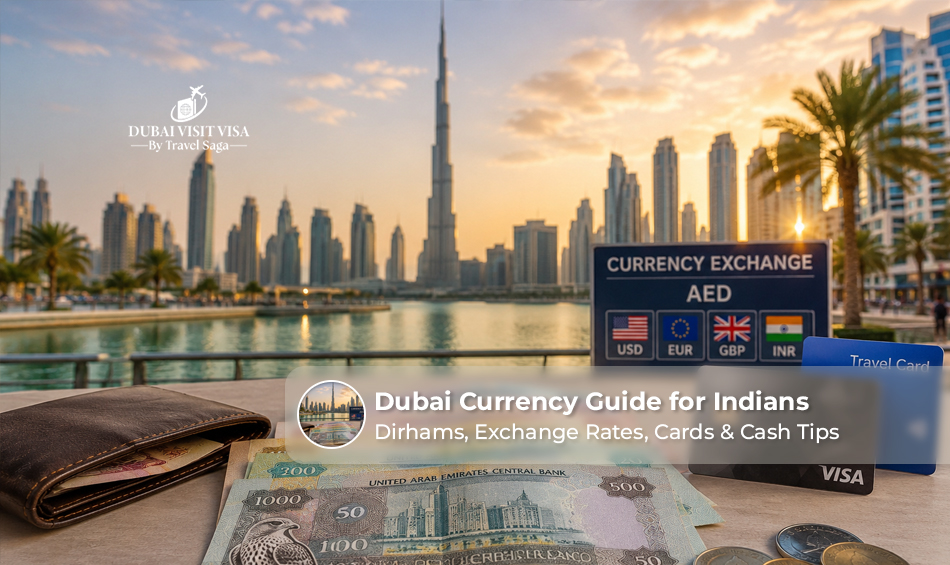
Travelling to Dubai from India involves more than booking a flight and arranging a visa. One practical question every traveller needs to answer before departure is: How should I manage my money in Dubai? Should you carry Indian rupees, convert them into UAE dirhams before flying, withdraw cash after arrival, or rely mainly on cards? The UAE’s official currency is the UAE dirham, commonly written as AED or Dh. The dirham is divided into 100 fils. The Central Bank of the UAE maintains a fixed exchange-rate regime against the US dollar, with its published intervention rates around AED 3.672–3.673 per US dollar. For Indian travellers, however, the more useful conversion is INR to AED. That rate changes with the market, and the rate offered by your bank, card provider or exchange counter may differ from the headline market rate. This guide explains how Dubai currency works, where Indian travellers can exchange money, when to use cash, when cards make more sense, and how to avoid unnecessary foreign-exchange costs.
What Currency Is Used in Dubai?
The UAE dirham is the standard currency used throughout Dubai and the wider United Arab Emirates. You will see prices displayed as AED, Dhs, or Dh. These all refer to UAE dirhams. Coins are issued in fils and dirhams, while banknotes are available in several denominations. For visitors, the most important thing to remember is simple: prices in Dubai are generally quoted in AED, not Indian rupees.
This matters when comparing prices with what you would normally pay in India. A restaurant bill, Metro fare, attraction ticket or shopping purchase should first be understood in dirhams before you calculate its approximate INR equivalent. When budgeting, it is better to think in terms of your total AED spending rather than constantly converting every small purchase into rupees. Otherwise, you may spend too much time worrying about minor exchange differences.
How INR to AED Exchange Rates Work
The INR-AED exchange rate is not fixed in the same way that the dirham’s relationship with the US dollar is maintained. The value of the Indian rupee against the dirham can move because of changes in the rupee, the dollar and broader currency markets. In addition, the rate you actually receive depends on where and how you exchange your money. This means there is no single universal rate that every Indian traveller will receive.
Your actual conversion can be affected by:
- The prevailing market exchange rate
- The exchange provider’s margin
- Bank or card fees
- ATM charges
- International transaction fees
- Any dynamic currency conversion offered by a merchant
For this reason, don’t judge an exchange option solely by searching for an online INR-AED rate. The important figure is the effective amount of AED you receive after all charges.
Should You Carry Indian Rupees to Dubai?
Carrying some Indian currency while travelling is normal, but you shouldn’t assume that every shop in Dubai will accept INR directly. Your Indian rupees are most useful when you want to exchange them into dirhams through a legitimate currency exchange provider. In general, it is more convenient to arrive with a payment plan rather than carrying your entire holiday budget in physical Indian currency.
You also don’t need to convert your entire travel budget into cash before leaving India. A better approach is to divide your travel money between different methods. Keep some dirhams for immediate expenses, use cards for larger purchases where appropriate, and retain an emergency payment option separately. This gives you flexibility if one payment method doesn’t work.
Where Can Indians Exchange Money in Dubai?
Dubai has numerous currency exchange businesses, particularly in shopping areas, commercial districts and transport hubs. You can also find exchange counters at airports, although airport convenience can sometimes come with less competitive rates than specialised exchange providers elsewhere in the city.
If you need to exchange money after arrival, compare the rate and any fees before completing the transaction. Don’t be afraid to ask how many dirhams you will receive for a specific amount of Indian rupees after all charges. This makes comparisons much easier than simply looking at the advertised rate. For larger amounts, even a small difference in the effective rate can become noticeable.
Is It Better to Exchange Money in India or Dubai?
There is no universal answer because exchange rates and fees vary between providers. Some travellers prefer converting a small amount before leaving India so they have local currency immediately after landing. Others exchange most of their money in Dubai after comparing local rates. For a typical holiday, a practical compromise is to carry enough AED for your initial expenses and use a combination of cards and local exchange services for the rest of the trip. Avoid making your entire decision based on convenience alone. The exchange counter closest to the airport exit may not necessarily offer the most favourable deal.
Should You Use Cash or Cards in Dubai?
Dubai is highly card-friendly, so most Indian tourists do not need to carry large amounts of physical cash. Hotels, shopping malls, major restaurants, supermarkets and tourist attractions commonly accept international cards. Contactless payments are also widely used. Cards can be particularly convenient for larger purchases because you don’t need to carry large amounts of cash. However, cash remains useful for smaller transactions and situations where card payment isn’t practical.
A balanced approach works best:
- Keep a modest amount of AED cash.
- Carry at least one international card.
- Keep a backup card separately.
- Use your preferred digital payment option where accepted.
- Don’t rely entirely on one payment method.
Using Indian Debit and Credit Cards in Dubai
Before travelling, check whether your Indian debit or credit card is enabled for international transactions. Many cards have separate settings for domestic and international usage. If international transactions are disabled, your card may be declined even though there is sufficient money in your account.
You should also check your bank’s foreign-currency transaction charges. These can vary depending on the card and transaction type. Some cards may offer lower foreign-exchange mark-ups or travel-related benefits, while others can be relatively expensive for overseas spending.
Before departure, check:
- International transaction activation
- Foreign currency mark-up
- ATM withdrawal charges
- Daily spending limits
- Cash withdrawal limits
- Whether the bank requires travel notification
This preparation can prevent unpleasant surprises during your holiday.
Be Careful With Dynamic Currency Conversion
One of the most useful payment tips for Indian tourists is to understand dynamic currency conversion, often shown as an option to pay in INR instead of AED.
A card terminal may sometimes ask whether you want the transaction processed in your home currency. While seeing an INR amount can feel convenient, the exchange rate used for that conversion may not be the most favourable. If your card provider offers a better conversion arrangement, paying in the local currency—AED—may be preferable. Always check what the terminal is offering before confirming the transaction rather than automatically selecting INR.
How Much Cash Should You Carry?
There is no fixed amount of cash that every Indian traveller should carry because spending depends heavily on the type and length of the holiday. A solo traveller staying in a hotel and using public transport will have different cash requirements from a family travelling with children and using taxis frequently.
Instead of deciding on a large cash amount, estimate your likely small daily expenses and carry enough AED for those situations. Your larger expenses can generally be handled through suitable payment cards where accepted. This also reduces the risk associated with carrying a large amount of physical currency.
Using ATMs in Dubai
ATMs are widely available across Dubai, including shopping centres, commercial areas and other convenient locations. If you need additional cash, withdrawing dirhams from a reputable ATM can be convenient. However, your Indian bank may charge international withdrawal fees, and the ATM operator may also display a separate fee.
Your card network may also determine the exchange rate used for the transaction. Before accepting an ATM conversion offer, read the screen carefully. If the ATM offers to convert the transaction into INR, compare the terms rather than accepting automatically.
Don’t Forget Your Dubai Travel Budget
Currency management becomes much easier when you have a realistic travel budget before arriving. Your Dubai spending may include accommodation, transport, food, sightseeing, shopping, visa-related expenses and miscellaneous purchases.
For example, a traveller who plans several premium attractions and restaurant meals will need a very different budget from someone focusing on public transport, affordable restaurants and free attractions. You can use our Dubai Travel Budget Guide for Indians and Dubai Holiday Planning Mistakes That Can Increase Your Budget to build a more realistic spending plan.
Cash Tips for Dubai Souks and Smaller Shops
Traditional markets such as the Gold Souk, Spice Souk and other smaller commercial areas can feel different from Dubai’s modern malls. Many established retailers accept cards, but keeping some cash available can make smaller purchases more convenient.
If you are shopping in a souk, don’t assume that a cash payment automatically means a better deal. Focus on the total price, product quality and terms of the purchase. For major purchases such as gold jewellery, electronics or luxury products, keep proper invoices and payment records.
How to Avoid Losing Money on Currency Exchange
Foreign-exchange mistakes rarely involve one dramatic loss. They usually happen through several small fees and unfavourable conversion rates. The easiest way to protect yourself is to compare the final amount you receive or pay rather than focusing on one advertised rate. For example, an exchange counter may advertise an attractive rate but apply a separate commission. A card may offer a convenient payment method but carry a foreign transaction fee. Always consider the complete cost.
Should You Carry a Backup Payment Method?
Even if you normally use one credit card, travelling internationally with only one payment method creates unnecessary risk. Your primary card could be blocked, lost, damaged or temporarily declined. Your phone could also run out of battery when you need a digital payment method. Keep a backup card somewhere separate from your wallet and maintain a modest emergency cash reserve. This simple preparation can save you considerable stress.
Dubai Shopping and VAT Refunds
If you’re planning significant shopping, understanding the UAE’s tourist VAT refund system can also help. Eligible tourists can claim VAT refunds on qualifying purchases made from retailers participating in the Tourist VAT Refund Scheme. The Federal Tax Authority currently states that the minimum eligible purchase is AED 250 per tax-free transaction, excluding VAT, subject to the scheme’s conditions. The refund isn’t automatic. The retailer must issue an eligible tax-free transaction, and the purchase may need to be validated when you leave the UAE. The FTA states that eligible transactions must be validated within 90 days of the tax invoice date. If you’re planning substantial shopping, keep your passport, receipts and eligible goods available as required by the refund procedure.
A Simple Money Strategy for Indian Travellers
You don’t need an overly complicated system to manage your Dubai holiday finances. Before travelling, decide how much you’re comfortable spending and divide your funds between cash and cards. Convert a reasonable amount into AED for immediate use and keep the rest accessible through secure payment methods. During the trip, review your spending every couple of days rather than waiting until the final day. This helps you notice if shopping, dining or attractions are taking up more of your budget than expected.
Final Tips for Managing Money in Dubai
A few practical habits can make your holiday financially smoother.
- Carry some AED cash but avoid carrying your entire budget.
- Check your card’s international usage settings before flying.
- Compare currency exchange rates and fees.
- Keep a backup payment method.
- Be cautious with ATM and card conversion offers.
- Keep receipts for expensive purchases.
- Check the latest VAT-refund requirements before shopping.
The aim isn’t to avoid spending money. It’s to make sure your money goes towards the experiences and purchases you actually want.
Conclusion
A combination of AED cash, an international card and a secure backup payment method is usually a practical approach. Compare exchange rates carefully, understand your bank’s overseas charges and be cautious when an ATM or card terminal offers currency conversion. Most importantly, plan your overall Dubai budget before departure. Knowing how much you want to spend on accommodation, food, transport, attractions and shopping will make every payment easier to manage. With the right preparation, you can focus less on currency calculations and more on enjoying your Dubai holiday. Plan your Dubai trip with the help of Dubaivisitvisa.in today.
FAQs – Dubai Currency Guide for Indians: Dirhams, Exchange Rates, Cards & Cash Tips
The official currency of Dubai and the UAE is the UAE dirham, abbreviated as AED, Dh or Dhs. One dirham is divided into 100 fils.
Yes, carrying some AED cash is useful for smaller purchases and situations where card payment isn’t convenient. However, you generally don’t need to carry your entire holiday budget in cash.
Many international-enabled Indian cards can be used in Dubai, but travellers should check international transaction settings, foreign-exchange charges and withdrawal limits with their bank before departure.
If a merchant or ATM offers a choice between AED and INR, understand the exchange rate and charges before choosing. Paying in the local currency can often avoid the merchant or ATM applying its own conversion rate, but the best option depends on your card’s terms.
Eligible tourists can claim VAT refunds on qualifying purchases from participating retailers. The current FTA rules include a minimum eligible spend of AED 250 per tax-free transaction and require validation within the prescribed timeframe.